Dormer Bungalow Conversion: Will Your Boiler Cope?

Converting a single-storey bungalow into a dormer bungalow adds heated rooms upstairs, and your existing boiler and pipework may not be sized to heat them. Add extensions and extra bathrooms, as larger projects often do, and a like-for-like boiler swap rarely works. On a job of that size, the answer is usually a system boiler paired with an unvented hot water cylinder, sized to the whole house. The key point is simple. The heating has to be designed into the conversion, not bolted on at the end.
We fit central heating across Liverpool and the surrounding areas, and conversions are one of the jobs where homeowners most often get caught out. The building work looks finished; the rooms look great, but the new bedroom upstairs never quite gets warm, and the new shower runs hot and cold. That is almost always a heating decision left too late. Here is what to think about, in plain English.
Why does a dormer conversion change your heating needs & will your boiler cope?
A bungalow was built and heated as a single floor. When you add rooms in the roof, you add heated space and new outside surfaces, which is why the title is "Dormer Conversion: Will Your Boiler Cope?". The dormer walls, the new roof and the new windows all lose heat. If the project also includes ground-floor extensions, the heated footprint grows again. The home now needs far more warmth than it did. Your current boiler was sized for the original bungalow. Whether it can handle the new rooms depends on two things. First, how much spare capacity the boiler already has. Second, how well the new space is insulated. A well-insulated dormer and extension lose far less heat, so good insulation can be the difference between keeping your existing boiler and needing a new boiler. This is why the order matters. Insulate to current standards first, then work out the heat demand, then size the system. Doing it the other way round leads to either a cold room or an oversized boiler you did not need.

Do you need a bigger boiler for a dormer bungalow?
Not always, but in larger conversions, the honest answer is usually yes. It depends on a whole-house heat loss calculation once the new rooms and extensions are added. A heat loss calculation works out, room by room, how much heat your home needs on a cold day. From that, we can tell you whether your boiler copes, what output a new boiler needs, and the radiator size each room needs. For a modest single room conversion, an existing boiler with spare capacity may be fine. For a full conversion with extensions and extra bathrooms, the demand is usually well beyond what the original boiler was sized for. That is when a new, correctly sized boiler installation earns its place. If you are weighing up the cost, we offer finance options to spread it over manageable payments.
How do you get strong hot water to several bathrooms?
This is where the type of boiler matters as much as its size. A combi boiler heats water on demand and has a flow rate limit. It is excellent for one bathroom, but ask it to feed two showers and a kitchen tap at once and the pressure drops and the temperature wobbles. For a home with two or three bathrooms, a combi is the wrong tool. If you are unsure of the difference, our guide to combi, heat-only and system boilers explains each in plain terms.
The better answer for multiple bathrooms is a system boiler with an unvented hot water cylinder. A system boiler heats your radiators and heats a separate hot water cylinder. An unvented cylinder is fed directly from the mains, so it delivers hot water at mains pressure to several outlets simultaneously. Two showers running together stay strong and hot. The cylinder is sized based on the number of bathrooms and the household size, so the system is built around how the home will actually be used. An unvented cylinder does need an annual service to stay safe and under warranty, and you can read why in our piece on neglected unvented cylinders.
That is exactly the route on a conversion we are working on now, which we cover at the end of this article.
How does the heating reach the new rooms upstairs?
Pipework has to be run from the existing system up to the new floor. The best time to do this is during the build, while the walls are still open and the floor is not yet laid. Once everything is closed up, running new pipes means lifting floors and chasing walls, which is messy and expensive. A conversion is also the right moment for a wider central heating upgrade if your system is ageing.
We usually recommend putting the upstairs on its own heating zone, with its own thermostat. That means you can heat the bedrooms upstairs and the living space downstairs independently. You get greater comfort, waste less gas, and the controls also help you meet the rules for new boiler installations. A good programmable or smart thermostat makes that easy to manage. Radiators for the new rooms should be sized to each room's heat loss, not picked by eye. Undersized radiators are one of the most common faults we are called out to fix after a conversion. The room is built, the radiator is too small, and it never warms up. Correct radiator installation from the start completely avoids that. If your project also includes an en-suite or family bathroom, our bathroom installation team can fit that alongside the heating.

What do the Building Regulations say about heating and a dormer conversion?
Converting roof space into habitable rooms is building work and always requires Building Regulations approval, regardless of whether you need planning permission. Several of the Approved Documents matter, and a few of them directly affect heating.
Approved Document L covers the conservation of fuel and power. It sets insulation standards for the new roof, walls and windows, and it sits behind the heating control rules. In England, the Boiler Plus standard has applied to boiler installations since April 2018. Every new boiler must meet a minimum efficiency rating and must have time and temperature controls. If the boiler is a combi, it must also have one of four extra measures: weather compensation, load compensation, flue gas heat recovery, or smart controls with automation and optimisation. A conversion is the natural moment to bring your controls up to standard and add zoning.
Approved Document B covers fire safety, and here a bungalow is treated more kindly than a two-storey house. When you convert a loft on a two-storey house, you create a third storey, with a floor more than 4.5 metres above the ground. That triggers the full protected escape route requirements. A bungalow converted to a dormer usually creates a second storey, with the new floor no more than 4.5 metres above the existing floor. In that case, the typical requirements are an escape window from each new habitable room, interlinked mains-powered smoke alarms on every floor, and 30-minute fire protection for the new structure. An escape window must give a clear opening of at least 0.33 square metres, measure at least 450mm in each direction, and sit no more than 1,100mm above the finished floor. Your Building Control surveyor confirms exactly what your layout needs, because an open-plan ground floor can change the picture.
One more thing worth checking early. If there is an old chimney or flue in the roof space, its position can affect both the structural design and where a boiler or flue can go. It is far cheaper to spot that on the plan than once the floor is down.
Why must the heating be planned before the build rather than after?
The pipework and wiring for the upstairs are first-fix work. First fix has to happen before the walls are boarded and the new floor is laid. If you wait until the conversion is finished, the heating becomes a retrofit, which means pulling apart work that has just been completed.
Bringing your heating engineer in at the planning stage, alongside your builder, solves this. We can agree where the pipes run, where the radiators sit, where the cylinder and boiler go, and whether the boiler needs upgrading, all before anything is closed up. We did exactly that on a full heating system installation in Maghull, and the result is a system that suits the whole house rather than one bolted together room by room. It keeps the job clean, it keeps the cost down, and it means the new rooms are warm and the hot water is strong from the day you move in.
What this looks like on a job we are working on now
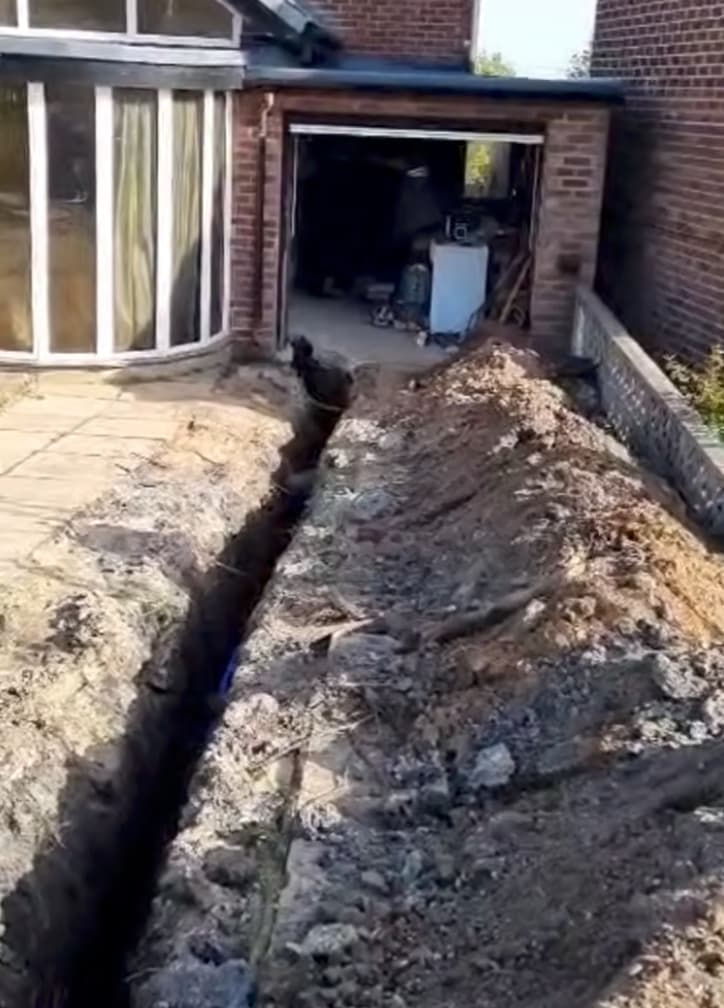
Right now we are fitting the heating on exactly this kind of project. A bungalow is being converted into a dormer bungalow with rooms upstairs and a set of extensions. With three bathrooms in the finished home, a combi would never keep up, so we are installing a system boiler with an unvented cylinder. That gives strong, mains-pressure hot water to all three bathrooms at once. We are also running three bathroom first fixes now, while the walls are open and the floor is not yet down, which is the right stage to do it.
The boiler is an Alpha system boiler, sized to the heat demand of the whole house once the dormer and extensions are added. Like other modern condensing boilers, it is compatible with a 20 per cent hydrogen blend, although that is a future consideration rather than the reason to fit it. The reason to fit this system is simple. It properly heats a much larger home and provides three bathrooms with the hot water they need at the same time.
This is not the first conversion of this kind we have taken on, and it is a good reminder of why the heating engineer and the builder need to plan together early.
Planning a conversion? Talk to us before the walls go up
If you are converting a bungalow, adding rooms in a loft, or extending and adding bathrooms, get the heating looked at early. We will assess your boiler, work out the heat demand and hot water needs for the finished home, and design the system around your build. That way, the heating is right the first time, your new rooms are warm, and your showers are strong when you need them.
Call us on 0151 739 8945, request a quick quote, or book online. You can also contact us with any questions. DD Wilson Gas And Heating Engineers Ltd is Gas Safe registered (583586) and family-run, serving Liverpool and the surrounding areas since 1998. See what our customers say.
PART 4: FAQ
Do I need a bigger boiler for a loft conversion? Not always. It depends on a whole-house heat loss calculation once the new rooms are added. If the conversion is small and well insulated, and your current boiler has spare capacity, it may be fine. For a larger conversion with extensions or extra bathrooms, the demand usually exceeds the original boiler's capacity, so a new, correctly sized boiler is needed. Have the heat loss assessed before the conversion is finished.
Why fit a system boiler and an unvented cylinder instead of a combi? Because a combi heats water on demand and has a flow limit, so it struggles to feed two or three bathrooms at once. A system boiler with an unvented cylinder stores hot water and delivers it at mains pressure, so several showers and taps can run together and stay strong and hot. For a home with two or more bathrooms, that is usually the right choice.
Do you need building regulations approval to convert a bungalow to a dormer? Yes. Turning roof space into habitable rooms is building work that always needs Building Regulations approval, whether or not planning permission is required. The work must meet standards for structure, fire safety, insulation and ventilation. Planning permission may also be needed, for example for a front-facing dormer or in a conservation area, so confirm with your local authority.
Will adding an upstairs bathroom affect my combi boiler?
It can. A combi boiler heats water on demand and has a flow rate limit. Running a new en-suite at the same time as the kitchen or another bathroom can reduce pressure and temperature. If you are adding bathrooms, a system boiler with an unvented cylinder, or a higher output combi for a single extra bathroom, often gives better hot water.
Is a hydrogen-ready boiler worth paying more for?
Be careful with the term. Modern condensing gas boilers, including current Alpha models, already run on a blend of up to 20 per cent hydrogen mixed with natural gas. That blend is not in the gas grid yet, and if it ever arrives, a Gas Safe engineer can make a small adjustment. A true hydrogen boiler that runs on 100 per cent hydrogen is a different product, still at the trial stage, and the wider use of hydrogen for home heating is uncertain. Choose a boiler on its efficiency, correct sizing and hot water performance, not on hydrogen claims.
When should I get a heating engineer involved in a loft conversion? Early, before the walls are boarded and the new floor is laid. Pipework, the cylinder, and controls for the upstairs are first-fix work that must be installed before the building is closed up. Bringing your heating engineer in at the planning stage, alongside your builder, avoids lifting floors and chasing walls later.